
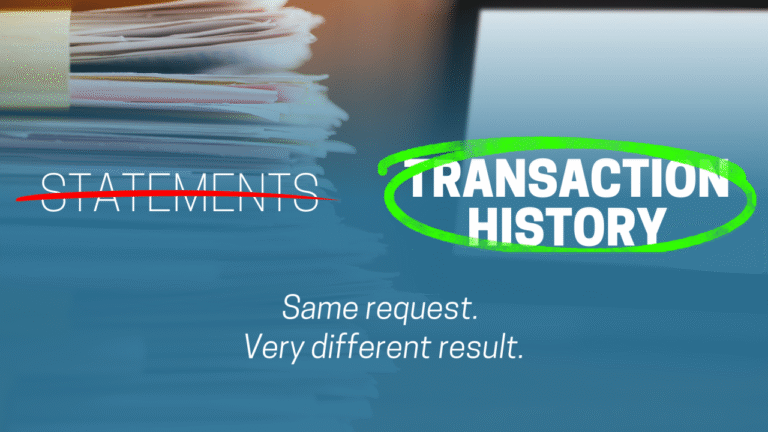
When you send a discovery request to a retirement plan administrator asking for “all statements,” here’s what happens on their end.
Someone checks the participant portal. They download whatever PDFs are available usually the last few years. If the records you need predate the current system, you get a familiar response: “No records found.”
Most attorneys accept that and move on. But the data isn’t gone. It’s just not where they looked.
The pivot
Stop asking for “statements.” Ask for “transaction history.”
Even better: ask for it “in native format (.csv).”
That language does something important. It signals you’re not looking for printable PDFs designed for the participant. You want the raw data, the actual record of contributions, rollovers, loans, and distributions that lives in their back-end systems.
Why this matters
A request for “statements” triggers a paper search. A request for “transaction history in native format” triggers a technical search. The administrator routes it to IT instead of customer service. And IT can query mainframes and archived databases that go back decades.
The participant portal shows what’s convenient. The transaction history shows what actually happened.
One small change. Completely different result.
If you’re working a long-term marriage case and need pre-marital data, try the language shift before assuming the records don’t exist.